
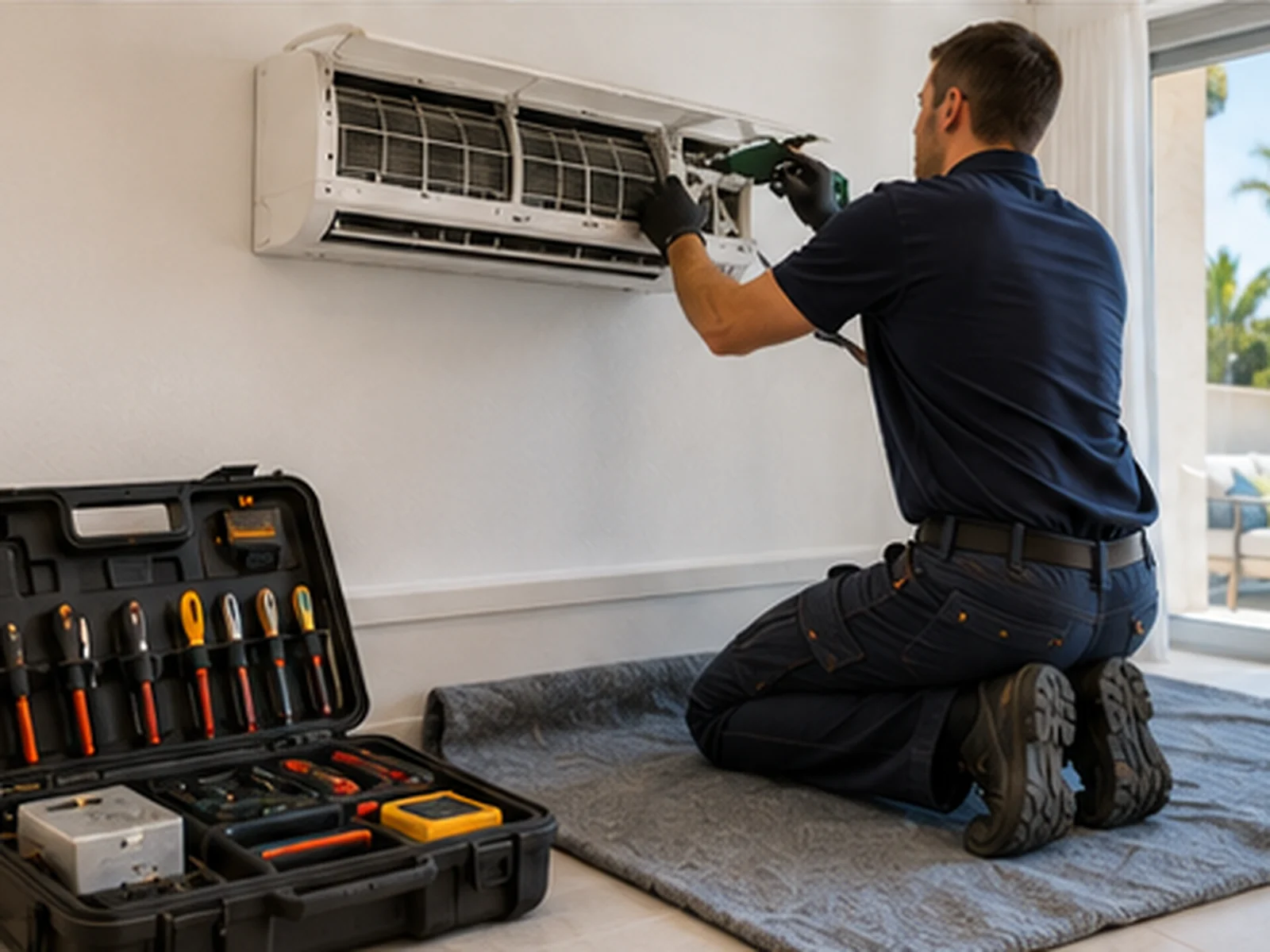
Air conditioning on the Costa del Sol often works in both directions: heating rooms through cooler, damp spells and cooling them once summer arrives. A unit that seemed fine in winter can still reveal weak airflow, drainage trouble or poor cooling when its workload changes.
A short test before the first very hot week gives you time to deal with a problem before the system is urgently needed. It is especially useful for holiday rentals, second homes and properties that have been closed for part of the year.
A five-step pre-summer check you can do safely
1. Test cooling mode before the heat arrives
Choose a mild day, close the doors and windows, select cooling mode and set a sensible temperature below the room temperature. Give the unit 15 to 20 minutes to settle.
Check whether the airflow becomes consistently cool, whether the fan sounds normal and whether the room begins to feel more comfortable. A unit that blows room-temperature air, stops repeatedly or shows an error code needs investigation.
2. Inspect and clean accessible filters
Dirty filters restrict airflow and make the system work harder. Many wall-mounted units have filters designed for routine owner cleaning, but the correct method varies by model.
Switch the unit off, isolate the power and follow the manufacturer’s instructions. Do not remove electrical covers or dismantle parts that are not intended for user access.
3. Look around the outdoor unit
Leaves, building dust and stored items can restrict airflow around the outdoor unit. Keep the surrounding area clear without opening the casing, bending the coil fins or using a pressure washer.
If the unit is difficult to reach, mounted at height or visibly damaged, leave the check to a professional.
4. Watch for water in the wrong place
Air conditioning removes moisture while cooling, so condensate should drain away through the intended pipe. Water dripping inside, staining a wall or collecting around trunking can point to a blocked drain, damaged pipe or installation issue.
Turn the unit off if water is close to electrics or is damaging the property.
5. Note smells, noise and performance changes
A stale smell at start-up may indicate dirty filters or internal contamination. Grinding, rattling, repeated clicking, circuit trips and unusually weak airflow are all reasons to stop and arrange a check.
Writing down the model, error code and symptoms before you call can help the engineer prepare for the visit.
What a professional pre-season service should cover
The exact work depends on the system and what the engineer finds. A useful service normally checks the parts that affect safe, reliable cooling rather than simply spraying cleaner at the indoor unit.
- Filters, indoor coil condition and accessible airflow paths
- Condensate tray, drain and signs of leakage
- Outdoor unit condition and unobstructed airflow
- Cooling operation, temperature performance and controls
- Electrical connections and visible signs of heat or wear
- Unusual noise, vibration and fault codes
- Refrigerant performance where the symptoms justify it
Refrigerant is not a consumable that should need an annual top-up. If a sealed system has lost refrigerant, the cause needs to be identified and handled by a qualified engineer.
Why timing matters for homes and holiday rentals
Summer faults are more disruptive because the room is already hot and local engineers are busier. In a rental property, one weak bedroom unit can quickly become a guest complaint, an urgent callout and a lost day coordinating access.
Testing early creates room for a planned repair. It also lets a property manager confirm that remotes work, filters are clean, drains are clear and guests have simple operating instructions before check-in.
When not to keep testing the unit
Switch the system off and arrange professional help if it trips the electricity, smells of burning, leaks water near electrical parts, makes a new mechanical noise or repeatedly displays a fault code.
Do not open refrigerant pipework, electrical compartments or the outdoor casing. Those checks require the right training, tools and safety controls.
A practical servicing schedule
For many homes, one professional service each year is a sensible baseline. A system used daily for heating and cooling, installed close to dust or sea air, or serving a busy rental may need attention more often.
EnviroCare has installed and serviced air conditioning in southern Spain since 1996. When you get in touch, share the property location, unit type, number of systems and any symptoms. The team can then advise whether you need routine servicing, fault diagnosis or a survey for replacement.